
Aug 19, 2026
.webp)
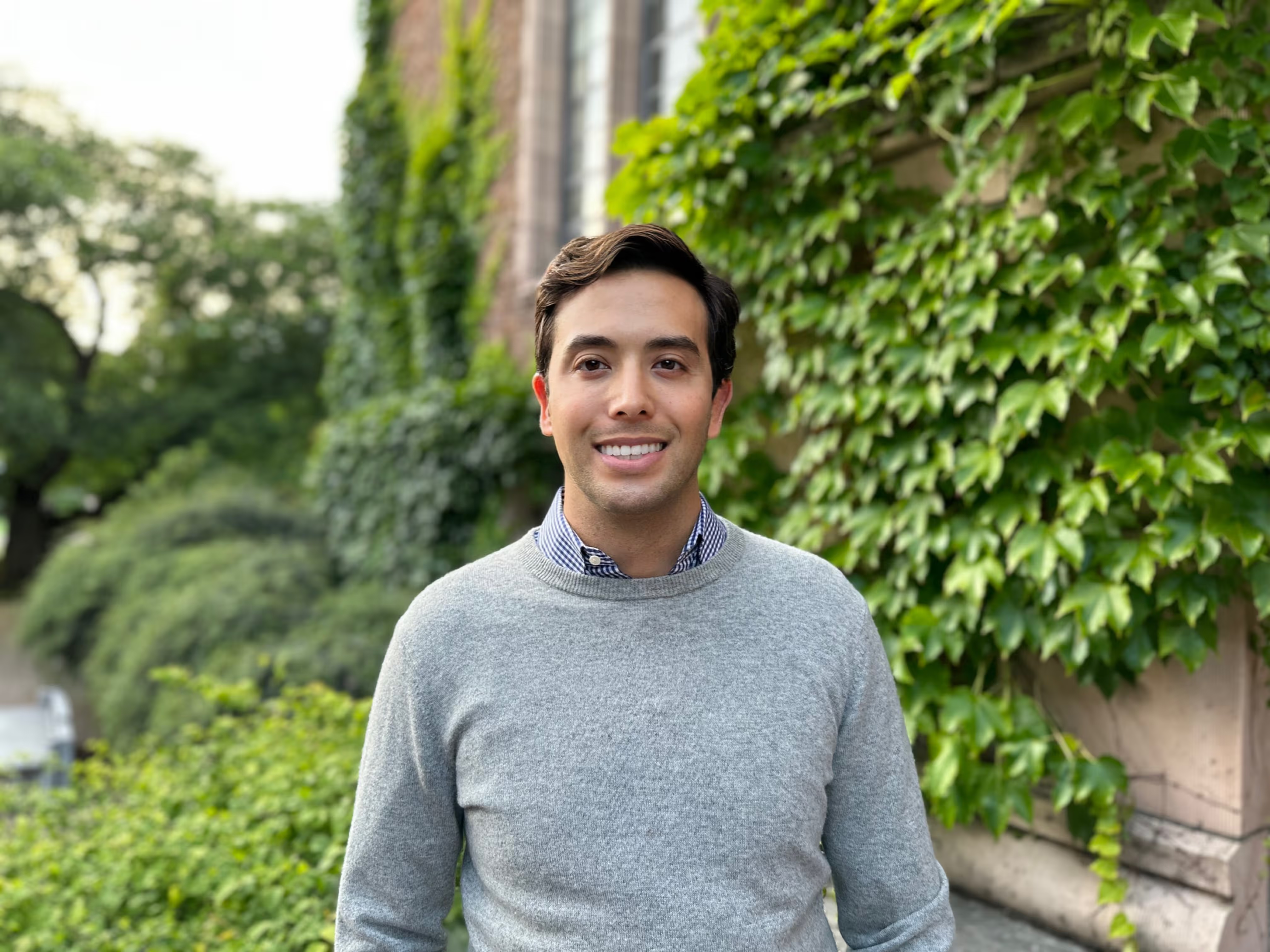
By Justin Neiman, Former Ivy League Admissions Officer

Deferred from Columbia Early Decision? This guide covers what a Columbia deferral means, how many deferred students Columbia typically admits, and how you can improve your chances of gaining admission in Regular Decision. We’ll walk through the available admissions data to help you understand the Columbia deferred acceptance rate, key Columbia ED deferral statistics, and how to write a strong Columbia LOCI.
If you applied ED to Columbia for the 2025–2026 cycle, there were three possible outcomes: admitted, deferred, or denied. Columbia hasn’t released full ED statistics for the Class of 2029 or 2030, but we do know that ED remains one of the most competitive rounds in the Ivy League.
For the Class of 2029, Columbia received 59,616 total applications and admitted 2,946 students overall, an acceptance rate of 4.94 percent. Columbia also shared that 5,872 students applied Early Decision. These numbers show how competitive Columbia ED has become.
Columbia College and the School of Engineering and Applied Science admission rate for the Class of 2028 was 3.85%. The Early Decision Acceptance Rate for the Class of 2028 was 11.9%
Columbia does not publish a deferred-to-admit acceptance rate, so the exact number of deferred students who are later admitted is unknown. Like many Ivy League schools, Columbia releases general admissions statistics but does not break down outcomes for deferred applicants.
Peer institutions provide useful context:
• UPenn reported a deferred acceptance rate of about 9.5% for a recent cycle
• Georgetown has stated that roughly 15% of deferred Early Action applicants are later admitted
• Dartmouth’s historical estimates place deferred admits in the 5–10% range
• MIT admitted 175 deferred applicants to the Class of 2029
While these figures do not reflect Columbia specifically, most admissions experts estimate that Columbia’s deferred acceptance rate likely falls within a similar range.
A deferral means the admissions committee wasn’t ready to make a final decision. They want to compare your file to the broader Regular Decision pool, see your midyear grades, and consider any new developments. Columbia only defers candidates they want to review again, so your application remains in full consideration.
Although you can’t change your Columbia materials, you can update applications for other schools. A deferral offers a chance to reassess and make last minute changes before early January deadlines.
A deferral is not a rejection—it’s an invitation to stay in the game. Keep excelling academically, remain proactive, and use this as an opportunity to refine your strategy. Remember, many successful students use setbacks as fuel for future success .I like to share this quote from a past student to just offer some perspective:
“If I hadn’t been deferred in the early round, I wouldn’t have realized how much my application needed improvement. I made changes and ended up getting into all of my top schools during regular decision. It was a blessing in disguise.”
If you’d like support with your LOCI or your Regular Decision applications, feel free to reach out.
This article was updated in December 2025 for the 2025-2026 Admissions Cycle.
Deferred from Columbia Early Decision? This guide covers what a Columbia deferral means, how many deferred students Columbia typically admits, and how you can improve your chances of gaining admission in Regular Decision. We’ll walk through the available admissions data to help you understand the Columbia deferred acceptance rate, key Columbia ED deferral statistics, and how to write a strong Columbia LOCI.
If you applied ED to Columbia for the 2025–2026 cycle, there were three possible outcomes: admitted, deferred, or denied. Columbia hasn’t released full ED statistics for the Class of 2029 or 2030, but we do know that ED remains one of the most competitive rounds in the Ivy League.
For the Class of 2029, Columbia received 59,616 total applications and admitted 2,946 students overall, an acceptance rate of 4.94 percent. Columbia also shared that 5,872 students applied Early Decision. These numbers show how competitive Columbia ED has become.
Columbia College and the School of Engineering and Applied Science admission rate for the Class of 2028 was 3.85%. The Early Decision Acceptance Rate for the Class of 2028 was 11.9%
Columbia does not publish a deferred-to-admit acceptance rate, so the exact number of deferred students who are later admitted is unknown. Like many Ivy League schools, Columbia releases general admissions statistics but does not break down outcomes for deferred applicants.
Peer institutions provide useful context:
• UPenn reported a deferred acceptance rate of about 9.5% for a recent cycle
• Georgetown has stated that roughly 15% of deferred Early Action applicants are later admitted
• Dartmouth’s historical estimates place deferred admits in the 5–10% range
• MIT admitted 175 deferred applicants to the Class of 2029
While these figures do not reflect Columbia specifically, most admissions experts estimate that Columbia’s deferred acceptance rate likely falls within a similar range.
A deferral means the admissions committee wasn’t ready to make a final decision. They want to compare your file to the broader Regular Decision pool, see your midyear grades, and consider any new developments. Columbia only defers candidates they want to review again, so your application remains in full consideration.
Although you can’t change your Columbia materials, you can update applications for other schools. A deferral offers a chance to reassess and make last minute changes before early January deadlines.
A deferral is not a rejection—it’s an invitation to stay in the game. Keep excelling academically, remain proactive, and use this as an opportunity to refine your strategy. Remember, many successful students use setbacks as fuel for future success .I like to share this quote from a past student to just offer some perspective:
“If I hadn’t been deferred in the early round, I wouldn’t have realized how much my application needed improvement. I made changes and ended up getting into all of my top schools during regular decision. It was a blessing in disguise.”
If you’d like support with your LOCI or your Regular Decision applications, feel free to reach out.
This article was updated in December 2025 for the 2025-2026 Admissions Cycle.
Former Admissions Officer, Harvard University
Former Assistant Dean, Stanford University
I’m a college admissions counselor and the founder of Selective Admissions. I help students navigate the college application process and position themselves as competitive applicants to top universities.

.webp)